

Watching the Skies with Interest: February-March 2022
Thoughts about upcoming astrological occurrences in February and March 2022, which include the majority of planets activating the northern hemisphere winter signs of Capricorn, Aquarius, and Pisces.
Usually when I read astrology, I do so personally, with natal, predictive, and relationship readings that are specific to the individual in question. But as I’ve been reading this past month or so, I’ve been watching a series of planetary convergences that impact us all.
They are so spectacular that I thought I might shine a light on them a bit. These are broad energies that impact everyone. As always, how they appear in your personal chart determines how much you are feeling, in what life areas, and if harmoniously or inharmoniously.
Between now and the Vernal Equinox on March 20th (in Denver, anyway), there will be substantial activation in the northern hemisphere wintertime signs of Capricorn, Aquarius, and Pisces. We have one set of planets activating Capricorn and Aquarius and a second set activating Pisces at the same time. What follows is my exploration of these themes.
One way of understanding astrological signs is through an archetypal, developmental lens. By this thinking, the progression of signs throughout the astrological year symbolizes human development, from forming a personality (Aries) to transcending the Earth plane and moving on to the next (Pisces).
The aspects that I’m tracking will place a great deal of energy into the signs that symbolize the mature soul:
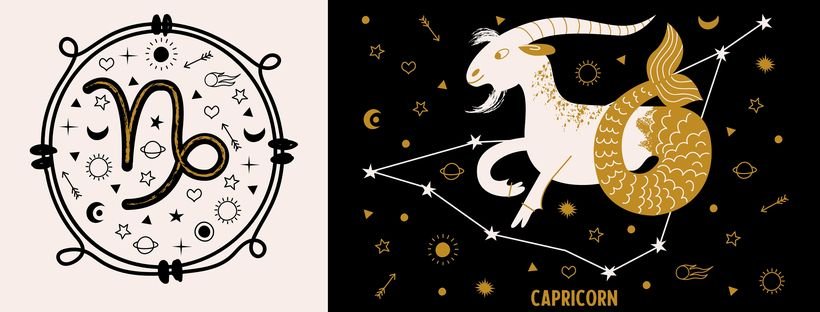
Capricorn. Coming home to the inevitability of time, aging, and learning our life lessons. Earning our reputation and stability. Careers, governments, father figures fall under this sign. Capricorn is an Earth sign, ruled by the planet Saturn.

Aquarius. Opening into group consciousness and service for the greater good rather than the individual. Accepting the changing nature of all things, and that which is unexpected. Groups to whom you belong, your goals, and inspired genius fall under this sign. Despite being mythologically associated with the water bearer, Aquarius in an air sign, ruled by the plant Uranus.

Pisces. Sensitivity, interconnection, and depth. Opening to the subconscious and unconscious, be it individual or collective. One foot on the Earth and the other in a deeper world, reaching into the beyond. Pisces governs spirituality, that which entraps us, and substance use. Pisces is a water sign and is ruled by the planet Neptune.
Already these energies are activated. The Sun is marching through the winter signs, and the Benefic planets, Venus and Jupiter, were activating Capricorn and Pisces respectively during the winter holiday season 2021.
Let’s look at the Capricorn and Aquarius activations first. Venus went retrograde* in Capricorn around the time of the Winter Solstice, and there she remains; Mercury retrograded in Aquarius in mid-January and is now also in late Capricorn. By the time Mercury goes direct on February 5th (MST), Venus will also be direct—and joined by Mars in Capricorn.
And here it gets interesting. Venus and Mars—personal planets of feminine energy, possession, and love (Venus) and masculine energy, activation, and sexuality (Mars)—will dance together in Capricorn for the entire month of February. They will conjoin Pluto (the planet of transformation, power, and sensuality) in late Capricorn on March 3rd.
What does it mean? I’m watching with rapt attention. Potentially this will be an interesting time for romantic connections and the integration of feminine and masculine energies inside of us. Pluto and Mars both have some very sharp edges, so don’t expect the ride to be all flowers and rainbows. Interesting, also, that these activating, integrating, transforming energies converge in Capricorn, which is a heavy, constraining sign. Seeds may be planted during February that blossom once Venus and Mars move into Aquarius on March 7th.
Now Saturn (karmic lessons and earned stature) has been hanging out in Aquarius for the past year. Michael used to say that the only thing that can break the grip of a hard Saturn is Uranus/Aquarius energy (genius, unexpected change, goals). Another way to look at these two energies is that Saturn/Capricorn is about YOU, Uranus/Aquarius is about US. Think meeting the karmic taskmaster (Saturn) with an infusion of electricity (Uranus).
Saturn in Aquarius (as well as Pluto in Capricorn, for that matter) feels like shaking the foundations. In addition to that Saturnian energy, Aquarius will be illuminated:
in early February by the Sun (life force, creative will),
mid-February by Mercury (communication, the everyday thinking mind),
and finally by the now conjoined Venus and Mars after they conjunct Pluto in early March.
Perhaps a period of incubating integration and transformation in February, and then feeling it open up in surprising ways come March? As Mars the Activator steps into Aquarius the Sign of Unexpected Change, just about anything could develop. Throw in some moderation from Venus the Lover and constraint from Saturn the Father of Time—ooh! I just can’t wait to see what’s coming!

While all of this is going on, we have a whole different energy blooming in sensitive, subterranean Pisces. Jupiter (fortune, expanse, higher mind) joined Neptune (spirituality, depth, sub/unconscious mind) in Neptune’s home sign Pisces around New Year’s Eve. Neptune is, in many ways, a higher vibrational octave of Jupiter, both planets carrying similar meanings and energies (much in the same way that Pluto is a higher vibrational octave of Mars—so cool that we get to see these pairs of planets merge their energies during this interesting time!).
The March 2nd new moon, at 12° Pisces 6”, illuminates that deep Piscean energy, especially since it occurs within a couple of degrees of Jupiter:
The Sun (life force, creative will, divine masculine)
conjunct the Moon (emotions, home, divine feminine)
conjunct Jupiter (fortune and expanse)
in Pisces (spirituality, depth, sub/unconscious mind)
while the ruling planet of Pisces (Neptune) is simultaneously 10 degrees later in the sign. On the 11th, subtle Mercury (communication, everyday thinking mind) moves into Pisces as well.
Was that a mind-full or what? Here’s what it means:
Helloooooo Piscean energy!
When harmonious, Pisces has a high spiritual vibration, deeply intuitive, otherworldly at times. Interconnected with all, seeing beyond. When inharmonious, Pisces can drown you in emotion, entraping you in murky depths that lack clarity and understanding.
How March will start for you is personal, but overall, this stellium (4+ planets in a single sign) leans in the direction of harmony, at least to my thinking.
As I’ve been researching this incredible confluence of energies, I haven’t come across any specific predictions that ring true, save one: that likely these next two months aren’t going to bring any one big event. Rather, this will be a period of increased energy and activation, of spiritual maturation leading into the astrological New Year (the Vernal Equinox, when the Sun moves into Aries). Now is an excellent time to integrate lessons as we prepare for the season of new energy and new life.
This period seems particularly harmonious for the healing and integration of feminine and masculine energies inside of us. Venus and Mars, Moon and Sun. Mother and father issues, partnership issues, and subconscious healing all may ask for attention as we march toward the Vernal Equinox. Influences of stability, change, and depth color all.
Deep healing is indicated for those called to work during this period. May it greet you harmoniously.
Warmly, Tiffany
* Retrograde motion refers to the planet appearing to move backward in its orbit relative to the Earth. During periods of retrograde motion, the energies of the planet can become more subdued and we often have opportunities to understand ourselves differently.
I provide individual astrological consultations for both natal and predictive purposes as well as synastry (relationship astrology). Contact me for more info.
Recipe: Roasted Vegetable Soup
I spent two successful months on the State of Slim this summer. Lost 20 pounds, felt better in my skin and in my clothes, and then life happened. Stress increased, socializing increased, and slowly I fell away from the plan. And re-entered some of my old disordered eating behavior: pairing periods of indulgence with periods of withholding intake.
But I learned some things from 6 months of eating disorder therapy, one of which is that self-neglect is a deeply entrenched behavior born of deep self-loathing. And I’ve set a boundary that I don’t neglect my own needs any more—and that includes my need to fuel my body when it’s hungry.
As I turned in to myself with the intent to love and provide care, I realized that I was struggling to stay on-plan because I was depleted. Two months of very strict dieting paired with multiple sources of deep heartache AND the work involved to get both of my business back on track post-pandemic . . . I was exhausted. Those cravings were a cry from my body for deep nourishment. So I created this soup with the intention feed myself—and craved it all week long until it was gone and I made a second batch.

Roasted Vegetable Soup
This recipe is more of a concept than an actual recipe—open to many interpretations and possibilities. It is soup. Feel free to add anything you have on hand!
Preheat oven to 475*
Dice a large variety of different vegetables—enough to substantially fill a large baking sheet. In this batch, I used:
a small red kuri squash
a handful of Brussels sprouts
the kernels from one ear of corn
a diced carrot
a diced jalapeno pepper
two diced bell peppers
sliced button mushrooms
1/4 head cauliflower.
Toss with high-heat appropriate oil (I used 1/2T avocado oil mixed with 3T water to minimize the amount of fat in the soup) and copious amounts of dried rosemary. Roast on a baking sheet in the preheated oven until beginning to brown on top, around 20 minutes.
In the meantime, in a large soup pot, I sauteed:
2 small onions
several stalks of celery
the diced stems from some swiss chard
6 or so diced roasted green chilis.
Once they were soft, I added
two boxes of chicken broth (keep an eye on those ingredients—stocks and broths often contain added sugars, which you may not want!)
the leaves of the aforementioned swiss chard
some kale and sliced cabbage I had left over from other dishes
some sliced snow peas left over from the previous night’s dinner.
Once the roasted vegetables were beginning to brown, I added them to the pot, along with salt to taste, a hearty pinch of dried thyme, and some fresh sage from the garden. I brought the pot to a low simmer, long enough to wilt the greens, and, BOOM, dinner’s ready!

Serving Suggesions:
For weekday lunches, I pair a small bowl/thermos of soup with a serving of lean protein (often grilled chicken breast). I believe this is a State of Slim Phase II compliant meal depending on the vegetables that you choose.
I LOVE this soup in the morning with a diced boiled egg or two on top.
For my kids for Sunday’s movie night dinner, we added some cooked tortellini and a sliced grilled ring of fresh Polish sausage from Bavarian Sausage Express.

Sustainable Action Includes a Balance of Energy and Effort
Sustainable action has a balance of discipline and ease, work and pleasure. You must move to create energy—sit too much and you wind up exhausted because no energy is generated. But care must be taken in how you use that energy, lest you fritter it away, dissipating in overactivity . . . and wind up exhausted once more.
So we seek balance.
Just Enough, but Not Too Much.
This piece of wisdom, which I heard over the summer from both Donna Farhi and Kim Schwartz, flowed beautifully with my previous years’ work on Polyvagal Theory. To sustain our energetic and creative flow, we need a balance of structure and ease.
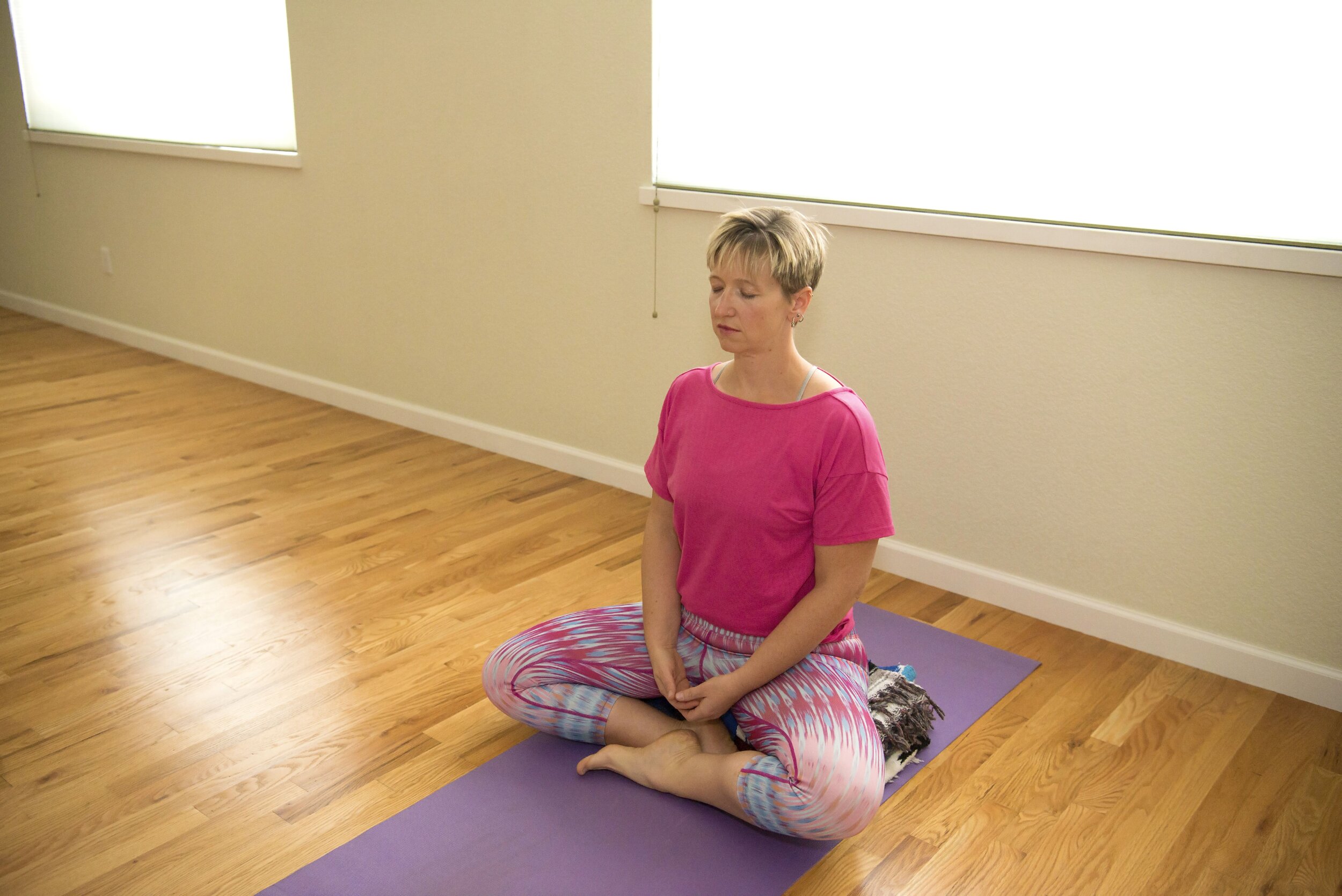
“Relaxed AND alert,”
Michael always used to say when we came to our sitting.
Our culture resides in extremes, taking our daily lives along with it. Work in a super busy, super stressful environment all day long and then collapse onto the couch in a self-soothing fog of television, alcohol, and/or food when you get home. Drive the children to after-school activities and appointments while simultaneously providing them with snacks AND parental advice AND sneaking in errands, and realize there’s no energy left to cook the nutritious meal you had planned. . . or to be tender to your kids, your partner, your pets. Never mind yourself.
Or the opposite model: spend your day-to-day in dreariness, denying your needs, and then party hard on the weekend or on vacation, trying to reclaim the joy missing from “getting done what needs to get done” every day. You feel like a zombie. Trapped, hopeless, maybe even angry at everything and everyone because there is no joy to be found. Hanging on for those rare moments when you can let go—lose yourself in some distraction for a brief breath of joy before you dive back into the dark.
If you have to lose yourself to find relief, what really is the point of living how you’re living?
One of the inevitable results of either of these models is that they slowly, progressively, insidiously worm their way into our nervous systems and become our norm. Over time, we veer ever more in the direction of hyperactivity/overbusy/anxious or lethargic/unmotivated/depressed. Very likely, we were raised in environments and by people who also veered in one direction or the other, deeply seeding these tendencies—and the beliefs that support them—into our subconscious minds.

Not enough . . . Just about right . . . Way too much!
Unsustainable action necessarily has consequences. For example, you may find yourself
putting on weight from overeating to self-soothe
developing an unhealthy relationship with alcohol to numb your stress and displeasure
losing yourself in a book/websurfing/gaming so much that you’ve lost opportunities to be productive or meet other needs
damaging your relationships because you don’t have the energy to invest in them
having trouble sitting still or relaxing for too long
slowly sinking into a dark place, with increasingly hopeless or negative thoughts
When you observe such undesirable consequences blooming into your life, it can be a gift. You can recognize them as a waving red flag that something in your life is unsustainable and needs attention.
Renunciation follows awareness like a shadow.
Observe the consequences of your lifestyle, and just by becoming aware of them, they are already correcting.
Very commonly, we have areas of our lives where we are hyperactivated and others where we collapse. Work way too much so there’s no energy for exercise. Spend all of your time in your head and none in your body. To lead a life that sustains joy and creative flow—and supports health and change when needed—we are well served to break this cycle.
Sustainable action has a balance of discipline and ease, work and pleasure. You must move to create energy—sit too much and you wind up exhausted because no energy is generated. But care must be taken in how you use that energy, lest you fritter it away, dissipating in overactivity . . . and wind up exhausted once more.

Tadasana
Mountain Pose
Collapsed . . . Good tone . . . Hypertonic
Salamba Padangusthasana
Supported Big Toe Pose
Too little tone . . . Just enough . . . Too much striving!

Virabhadrasana I
Warrior I
(Too much tone on the bottom . . . lower back = ow, ow, ow!)
So we seek balance. Keep our legs engaged in a squat or a Warrior, enough so we don’t dump undue force into our joints but not so much that we can’t walk later from fatigue or muscle soreness. Work hard, but keep a finger on our precious beating hearts so that we know when to take a break, eat, connect with other humans. Set a timer when we’ve been sitting too long and take 10 minutes for a change of scenery, companionship, a little physicality. THEN we have a chance to arrive at the end of the day with enough energy to function in our personal lives as well.
It isn’t the on/off that we seek. It’s the both/and. A fine blend of simultaneous effort and ease that sustains creative flow.
Action + containment = abundant life force.
It’s not nearly as exciting as the highs and lows, but it is freeing. And for those of us who seek self-improvement, that balance provides the fuel we need to achieve our goals. One step at a time.

A Lament for Michael
This morning finds me sick of scrubbing the dried salt of my tears from the inside of my glasses. I penned these words to help me process and express my immense grief at the passing of my Teacher Michael. Now I share them with you.
As a child, I struggled with a certain awkwardness, and a strange sense of longing. I attended a small Catholic school for many years, and my awkwardness attracted bullies from all directions: in the halls and doorways between classes, on the school bus, even from my friends during sleepovers. I realize now that, due to my sensitivities, making sense of the world was an insurmountable task for young me. I don’t believe that I could have navigated my life with less awkwardness if I tried.
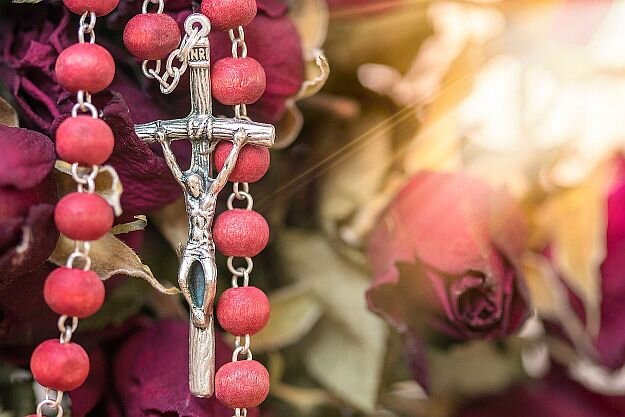
I always enjoyed attending mass, even though I could never quite connect with it. Confession, Communion, praying the rosary in the garden between the chapel and the priests’ residence, walking the Stations of the Cross, Confirmation—all such lovely rituals, and enjoyable, but somehow hollow for me. Many members of my extended family are deeply religious, and the women in the cold church on a Wednesday morning, scarves covering their heads, certainly appeared to have a connection to those rituals that I longed to understand.
There was a mystery there, in that dark, echo-y space where I spent so much of my childhood. The house of God was at once comforting and frightening, and above all other things, elusive. Try as I might to feel that visceral knowing that this was the truth, I never could.
Occasionally, I’d daydream about becoming a nun, thinking that if I just dedicated myself harder to God, His mysteries would unfold themselves to me. And, when that happened, the hunger, that sense of searching for something I couldn’t find, would be sated. Though, by the time I was in high school, I understood that Catholicism wasn’t for me and turned my energies toward studies and achievement and friendships that filled that need for purpose.
One thing with which I did connect, and deeply, was the teaching about service. To seeing all people as equal in the eyes of God and deserving of aid when in need. Feed the hungry, shelter the poor, forgive. I marvel now at my good fortune, growing up in a parish that was poor itself, with visiting priests from Latin America who had lived poverty and suffering. Where I never heard hateful things about women or homosexuality or other ugliness commonly associated with the Catholic church. Where we had field trips to help at sandwich lines and had to accrue community service hours to graduate.

“Love and serve thy neighbor”
This message magnetized to my soul. I’m certain it’s the reason I chose a vocation in Social Work and now why I teach, knowing that there are other roads on which I could travel to achieve more security and material comfort.
By my mid-twenties, I had traveled the road of achievement and education and social norms. Married and loving our two wonderful dogs, establishing a career in public policy, renovating and landscaping our small home in Northwest Denver. I had taken my first Yoga class in a Littleton rec center when I was 19, and practiced intermittently with videos and magazines until a grad school friend suggested that a group of us attend class together to help us stay in touch as we were establishing our careers.
How I first found Yoga at 19 is a bit of mystery to me, even today. I have no idea where I heard of Yoga or even knew what it was, but somehow, I’ve always known that it’s something that I do. Not something that I’m supposed to do—and there are many things that I know that I’m supposed to do—but something that I do.
Sedentary and overweight, I always felt betrayed by my body. It was a source of shame and embarrassment, a reason to be abused by others. That I couldn’t run as fast or as far as other kids, that I wasn’t skinny and desirable to boys when I wanted to be, the number of times that I did something that I enjoyed (like dancing) only to be met with cruelty because I looked so ridiculous. I faced that shame full force on the mat, struggling to make transitions between poses when my friends made them so easily, encountering so much fear that I wouldn’t be able to do certain things—or, worse, that I would taste the bitterness of my shameful unworthiness if I tried and inevitably failed.
And yet, I was drawn to the practice like a moth to flame. I was truly terrible at Yogasana in my first several years of practice. I can’t say that I remember even enjoying it much, and yet I found myself on that mat week after week. It was an Ashtanga studio where I began to practice regularly and, when they closed, I found myself asking for recommendations for somewhere new.
It was my sister-in-law who made the suggestion. “The Kriya Yoga Center on Tennyson. I really like Michael there.” And so I went. Michael taught a beginner’s Hatha Yoga class on Monday nights and all-levels on Saturdays, and I can’t remember which one I first attended, but I remember vividly the first time I heard him speak.
Seated on a blanket on my mat, second-from-the-front along the south wall of the studio. To Michael’s right. It was my favorite spot, and I can see myself sitting there even today. I have no recollection of the topic on which Michael was speaking—he always started class with sitting and philosophy—but the knowing that happened in that moment. It still takes my breath away.
That this was the thing for which I had longed, and almost forgotten. To this day, I don’t have words to fully describe that thing, somewhere at the intersection of truth, wisdom, practice, and discipline. “Yoga is itself,” Michael used to say, that it defied definition because it was simply Yoga, no more and no less. My soul was prostrate on the floor at Michael’s feet as he spoke, and I knew that I had found my way home.
Those early days of blossoming into the practice fill my memories with such joy. My bestie Jess coming all the way from Broomfield for the Monday night beginner’s class, a weekly break from her infant twins and our little bit of time together. Saturday mornings with the studio so packed that we practiced mat-to-mat, with someone in the back hallway and another person in the prop closet so we could accommodate all comers. Sunday Satsang, delicious chanting and sitting and teaching and togetherness. Sangha. I came to feel the meaning of sacred community.
It didn’t take long to work every class that Michael taught into my schedule. To begin to understand meditation and try, poorly, to weave it into my daily life.

To fill book upon book with notes from his teaching. I took my first astrology course during this time—and still refer to the notes from it, although I didn’t understand that art/science until years later.
Gradually the world began to make more sense to me. I had more tools with which to navigate it. In those early days, my understanding of the teachings were largely intellectual and therefore surficial, and yet my body and my life were changing for the better. I was happier, more confident, more observant, more alive. And hungry, so hungry to learn more.
Somewhere along the line, Michael began to see me, too. One afternoon, we were speaking near the pew in the studio’s foyer, and I said or did something flippant. “You have a great deal of anger, don’t you?” he asked. Taken aback, I’m sure I denied that I did. I had never seen myself as having anger, and my ego was so ashamed to stand next to such a wise and gifted Teacher in such ugliness. Michael met my defensive outer shield that day, and called me on it. Yet not with the reproach to which I had become so accustomed.
I came to know that I could turn to him for counsel. That he would see me clearly and lean into the painful and difficult conversations with honesty and helpful teaching. I trusted that, in his gaze, I would find neither judgement nor cause for shame. That I would have space and support to grow.
The space between that time and now is filled with the story of human existence. My own, and his. Of the ebbs and flows, and ebbs of the Sangha and the Kriya Yoga Center. Of his guessing my pregnancy with Ally, weeks before a test confirmed it. Of my descent into obesity and crippling depression, and later the crumbling of my marriage and the life my now ex-husband and I had built together.
For years, I stared into inky blackness, no energy to lift my spirit or my life to be found. My life was beautiful and yet I could see no beauty. My babies, so wonderful in their opening to the world. My husband, working so hard and with such dedication for us. And it was lost to me. An empty shell exhausting myself as I served my family, whom I loved so deeply, numbing this nonsensical and all-consuming pain with food and ego.

Om in the darkness. Photo credit Ally Bucknam.
During those dark times, the mat and cushion were my refuge. I still remember the emptiness I encountered when sitting, this strange sound of a water droplet, falling forever and finally hitting the impenetrable blackness of that hole, lonely and wasted. And somehow, it comforted me.
I lacked the energy to attend class, but knowing that the studio was there, that Michael was there, was a beacon for me in the dark, a salve to my soul.

He read my natal chart for the first time during those years, and in some frustration with the death grip with which I held my pain, he told me with force,
“Serve or suffer! Serve or suffer, tiffany. If you cannot serve, you will suffer.”
I’ve pondered the mystery of that teaching for many years. I was serving my family full-time, and yet my suffering would not abate. What was I doing wrong? In retrospect, I think that the wily ego was causing some mischief. That the mind thought that my actions were service, but misunderstood the meaning of the word. For how can one truly serve if their actions come at their own expense?
We beings of light are not destined for martyrdom. Life is rooted in reciprocity. That which we sew returns to us—and if it doesn’t, there’s likely something out of balance..

The mat and the cushion. Photo credit Elimar Trujillo Photography.
Yoga is the sutra, the thread, by which I have woven together this life. The mat and the cushion, the mat the cushion. I never leave them for long, and when I do, it is often pain that motivates my return. Somewhere along the line, I found my way back to asana practice. Mat in the middle of the living room, toys everywhere, dogs licking my face and children using me as a jungle gym as I practiced what little asana I could remember to do.
I attended class maybe once every month or every other month. Inconsistent but slowly working my way back into some light, normalcy, discipline. Then two things happened, in close succession: Michael announced the convening of a study group that required a twice monthly commitment, and decided to close the studio on Tennyson.
Personal Spiritual Transformation the study group was called, and it promised a personal application of the Teachings “for those who are truly ready.” Even recognizing the burden it would place on my family—on my husband especially—to have me away from home two Sundays per month plus 1:1 counseling as needed, I knew I would do it. For the chance to study alongside other seekers, to bathe in the light of this ancient wisdom. A pack of stampeding animals couldn’t keep me away.
And transform my life it did. For the first time, I practiced Sadhana—daily spiritual effort. PST sparked discipline in me that continues to this day. And, far more importantly, it tamed the grip that the intellect had on my life. During a lecture on the chakric system, I realized that, somewhere along the line, I had shifted from relying on the mind to decide a course and direct my actions to listening to myself.

Photo credit Emma Ambroziak.
My inner voice began to call to me through the darkness. And it felt right. I heard my instincts and, though I mistrusted them at first, I came to rely on myself for direction instead of doing the things I thought I should do. I started reflecting on the Teaching and observing its impact on my life, instead of simply recording it verbatim and mechanically trying to follow. I began to live this path instead of thinking it.
I noticed that my face betrayed an anger that I didn’t feel or recognize, but seeing it in pictures scared me. I approached Michael for help, and he suggested that, “the heart is the antidote to anger. Open your heart.” The road paved by that advice found me telling him years later (and 75 lbs. lighter), “I think I’d like to teach.”
“Tiffany,” he replied, “you have studied with me for many years. You know everything that you need to know. Go teach.”
“But I don’t know what I’m doing,” I stammered.
“Everyone feels that way when they start. I did. Do it anyway,” He replied.
These few sentences remain emblazoned across my heart. Michael’s confidence in me shook my ashamed, wounded, unworthy ego to its core. It is the most important and meaningful conversation that I have had in this lifetime. Some months later, during a chart reading, Michael told me I would be an excellent teacher.

Badda Dandasana. Photo credit Elimar Trujillo Photography.
While I’m not quite ready to apply that adjective to my teaching, my life is now dedicated to earning it, and to earning the right to stand on the shoulders he so generously shared with us.
Even as this new vibrancy erupted in my life, moving the Center to Wheat Ridge seemed to deprive Michael of some of his. Still so wise, such a passionate and talented teacher, there seemed (at least to me) to be a growing pain there, a dissatisfaction. My God, Michael was so beautiful in his humanity. He was always Michael. No fancy Yogic name, no Swami in his title. At once a rare and elevated being and just a guy. Who, like any of the rest of us mortals, suffered and struggled and walked this real and sometimes painful world where even the highest mind cannot protect you from the dark.
At first occasionally, and then more frequently, his teachings would have a certain . . . negativity? Though I hate to use that description because I know how much he disdained it. A hardness, rigidity, insular-ness? I digested beliefs that most Yoga isn’t real Yoga, that only this path was “true,” and other Western Yoga is loaded with deception and falsehood. That it couldn’t be found elsewhere or with other teachers.
And I believed it, for a while, until I went to the Temple of Kriya at Michael’s urging to complete my teaching certification. And there I found, from all over the country, other seekers like myself, who drank from the cups offered by their own Teachers and walked similar paths to my own. And I found other Teachers—also disciples of Kriyananda—whose wisdom I trusted and under whose tutelage I flourished.

Preparing to practice Nadi Shodhana, one of Michael’s prescriptions for my personal imbalances. Photo credit Elimar Trujillo Photograpy.
That which I believed to be a dying path instead burst exquisitely to life, and with it, my own heart. I found, and still find, myself energized and ever more committed to and in love with the practice of Yoga. And as this love blossomed inside of me, a schism erupted between Michael and I. Even as I finally felt prepared to seek discipleship from him, our roads were diverging. He twice denied my request for initiation, to my great disappointment.
Kriyananda expected his students to ask their questions three different times so that he was sure they wanted an honest answer. I wondered if Michael wanted me to do the same regarding initiation, until, during class one night, he explained that it is the job of the Disciple to understand the dream of the Guru and serve it. “Love the Teaching, not the Teacher,” he used to say, and this seemed in line with that aphorism.
So the next time we were together, one of our last conversations, I told him that he had been my Teacher for many years, and I was sorry that I didn’t know his dream. Would he tell me what it is?
Michael grew quiet, and thoughtful. A single word passed his lips, uttered with such gravity that I knew what it meant to him.
“Freedom.”
Knowing that entering a Guru-Disciple relationship would necessarily bind our souls in a way that would inhibit his freedom, I stopped seeking initiation. And the chasm between us widened.
This time period, the early days of my teaching and continuing Yoga education, is blurred with this weird mixture joy and pain, from which I am still recovering. Between Michael and I, there were painful words uttered on occasion. He let me know that he did not support the direction where I was headed, that the things I enjoyed and believed were “not Yoga.” More often there was this empty sense of growing distance, of being ejected from the nest and not understanding why.
I sought counsel for my pain and confusion from other Teachers to whom I had grown close. There was help there, but little solace. Then one fateful night, I found myself in a pose—was it Down-Facing Dog maybe?—at the front of class, to Michael’s right, when he uttered the words, “Yoga is dead.”
My heart stopped beating. The Teacher who fed me the milk that sustains my life now tells me that it is rotten? These Teachings help me organize and make sense of the world around me. I turn to them when I am lost and find my way home. How, how could he believe that this is death? How could he say such a thing?
I wonder sometimes if I had the courage to speak up, to counter him, if it would have made any difference. But I know the answer. As he had once met my defensive shell, I believe that I was now meeting his. And I was not of the strength to call him on it.

The labyrinth at Joyful Journey Hot Springs, Moffat, CO. Photo Credit Tiffany Bucknam.
So I went my own way. Quietly, painfully working to reconcile my gratitude for the Teacher who led me into the light with the darkness that I perceived him to now project. And even as I type that sentence, I know this is a gross oversimplification, that there are layers to this story beyond even what I can see.
I have lived with this hole in my heart for years now, trusting that I honor Michael’s Teaching by offering the best of myself to my students, even though he expressed disgust for the way in which I do it. We spoke for the last time about a year ago. There was a chance encounter in a grocery store, where he took offense to an offhand comment that I made, and walked away without a word. A few moments later I found myself next to him in line; he didn’t acknowledge me, and again I watched him walk away.
This morning finds me sick of scrubbing the dried salt of my tears from the inside of my glasses. As much peace as I like to think I’ve found with this situation, clearly it pales in comparison with the depth of my feelings. Since learning of Michael’s passing early this week, I can hardly stop crying. I am seeking desperately, blindly for words to explain how I feel and why. And there are none.
The Teacher who set my feet on the path that feeds my soul with passion and purpose is gone. Rarely are there actions in my life or Teaching that don’t have a root in that which Michael taught me. Daily I am grateful for him. By all accounts, his life ended in tremendous pain, and that breaks my heart in unspeakable ways. I loved this man. I still do.

A prayer flag that hangs outside my home. Photo credit Tiffany Bucknam.
Michael Bonamer, I bow in the deepest gratitude. May I honor your life by my service to the Teaching and to my students. By the weaving of this thread, may you continue to touch lives, lives that will touch other lives, and go on to touch still more lives extending far beyond our own. May your soul reside in peace, peace, and greater peace.

Om Shanti, beloved Teacher.
May you find the freedom that you seek.
Energy is Precious, and Is to Be Conserved
As we age, energy becomes an increasingly precious commodity. In his Teachings From the Source, François Raoult shared his personal daily practice, which, to my surprise, included only one standing pose. The standing poses are the most basic and important poses to master, but, one mastered, he said, visit them, but do not expend too much energy there. Retain your skills and your accomplishments, but also your energy, so that you may concentrate on other things.
Conserving energy, so that it remains abundant and balanced, is worth work and focus all on its own.
But how do we do this?
Yoga sees the body as multidimensional, composed of koshsas, or sheaths. In a very simple way, you can consider these layers:

Our society places a great deal of emphasis on developing our mental and physical bodies, but we don’t receive much cultural context or education about our energetic bodies. We may have concepts about mystical energy fields, auras, or the like that seem crazy, mysterious, or inaccessible to us.
But the energy body isn’t a mysterious thing. Here are some concrete ways to perceive your energy body right now:

The first step in conserving our energy is paying attention to our energy bodies. Much in the same way that we ask ourselves how do I feel and what do I need when practicing Nonviolent Self-Talk, observing our energy throughout the day is an excellent way to develop energy awareness. And once we are more aware, we can deepen our inquiry:

This is a fascinating tidbit from my recent study of the human nervous system:
The tone of our nervous system (tired, anxious, relaxed and alert, etc) determines how we perceive our reality.
During low energy times, you may find that you have more pessimistic thoughts or have trouble tapping into your creativity. When you are anxious, you may have unrealistic expectations of yourself, feel unsafe, or engage in negative self-talk. Maintaining a positive, balanced state of mind (and making healthy lifestyle choices) is much better done when our energy is balanced, flowing, and abundant.
Now that we have developed a better understanding of our energy bodies and what impacts them, we can begin to experiment.

My own explorations on this topic have led me to make a number of changes. I notice that there’s often a point in the day when I cross a line between work feeding me and work draining me. When I find myself coming close to that line, if I can steal 10 minutes and put my legs up a wall or on a chair, it makes a big difference.
Taking 30 minutes to each lunch in the middle of the day does more than fuel my body—it helps me recharge my batteries. Likewise, marking the transition from work to parenting, day to afternoon/evening, with a shower/bath/change of clothes/short nap helps me be a more present mom and partner.
Sometimes this inquiry can illuminate the need for bigger changes that are not so easily resolved. For example, you may realize that there’s something in your work environment or your marriage that is draining and there’s no way to offset it. Nonviolent Self-Talk comes in very handy in situations like this.

You may find that you have two competing needs, like a need to retain energy versus a need to succeed in your job or a need for equity in getting the housework done versus a need to live peacefully with your spouse. There is a reason why you chose your current course of action. Once you get in touch with your needs, you can discern if your current course of action is truly serving the greatest need.
If so, it’s time to make space to mourn the needs that you are choosing not to meet right now—which requires you to fully acknowledge and feel the sadness, anger, disappointment, frustration, etc that you may be avoiding. Only then can you reside in peace and purpose about your decisions.
Other times, you may need to reclaim your boundaries. Perhaps you are giving too much to someone else—or your job—and you need to reset some expectations. For example, my children strongly dislike running errands, but some days I just don’t have the energy to drop them off at home before going to the grocery store. There are many times when I want to run over the end of a session with a client or accommodate someone running late, but, knowing that this will diminish the energy I have to move into the evening, I stick to my schedule.
In much the same way that getting enough activity and eating well help to maintain our health, energy conservation helps us live more enjoyable and fulfilling lives. Energy awareness is a skill, like any other. Not mastered in a day but slowly cultivated, like emotional intelligence and physical strength. Years ago, I had a Teacher remark to me that he can’t remember ever running out of energy—and he was a good 20 years older than me, at least! While I’m not sure that kind of boundless energy is a reasonable goal for all of us, certainly we can improve the quality of our lives by observing and tending to our energy bodies.

From the Mat into Real Life, Three Teachings for the New Year

When this crazy pandemic year overlaid my 45 year Saturn opposition (Saturn = bringer of root karma, opposition = from outside of yourself), I knew I was in for a good butt kicking.
Stripped of that which feeds me and makes my life enjoyable, I found myself confronted with the painful reality of my binge eating disorder, my challenges feeling connected in relationships (and to myself), and a lack of sustainability in my work life. Never mind the multitudinous challenges faced by the people whom I love and serve, nor the daily logistics of work and school and socializing at home, online, with distance.
Eeeeyah. Not the easiest or most enjoyable year. Not even a little.
But, as it has been for most of my adult life, I found solace, meaning, and rebirth on my mat. One of my earliest Teachers used to say, “on the mat, as in life,” to remind us that our practice isn’t just something we do during that one-hour-once-per-week that we attend class.
Yoga, as all wisdom, is meant to bloom into the totality of our lives. We can learn to bend without breaking on the mat, and then stretch ourselves within reasonable limits at work.
We grow stable and expansive standing on our own two feet in Tadasana so that we may stand against the flowing waters of life and hold our ground.

We turn upside down—and even practice entire sequences standing on our heads or shoulders—so that when the world goes sideways, we do not.
One of the tremendous gifts of this pandemic is that Teachers who otherwise would have eschewed virtual practice took their teachings online. And this hungry seeker bathed in the glorious accessibility to Teachers I had only dreamed of experiencing.
It has been a fascinating time of study and growth, one for which I am deeply grateful. In my reflections as the year turns anew, three teachings jump off the mat ardently, shifting the paradigms in which I make sense of my life. I share them here in case they may be of some benefit to you as well:
Energy is precious, and is to be conserved.
Sustainable action includes a balance of energy and effort.
Remain in inquiry, cultivating a sense of curiosity about how a given teaching applies to you specifically.
Over these next few weeks, we’ll explore these concepts in greater depth. I look forward to sharing them with you.

The aftermath of my New Year’s morning home practice.
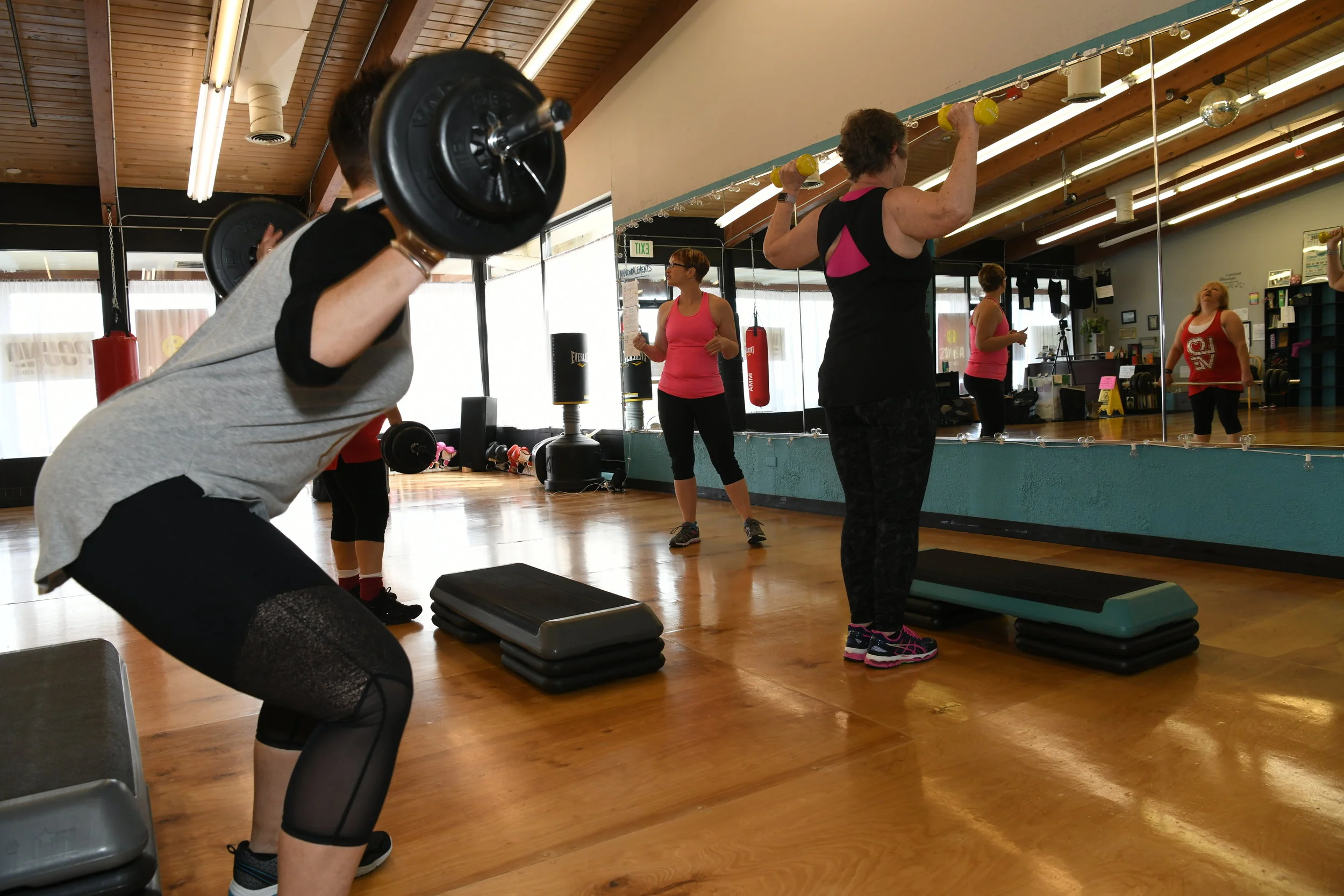
Powerful information on the links between strength and health
Summary of a recent HumanOS podcast on the benefits of strength training as we age.
I receive a weekly newsletter from HumanOS, an app that provides healthy lifestyle advice that is rooted in current research. I’ve subscribed to a number of such mailing lists over the years, and almost always unsubscribe after a month or two because I’m not learning much, but not this one. There’s always something interesting in there.
Their most recent podcast hit me, as they say, right in the feels. Or, more specifically, right in my practice. The information provided is so germane to the classes that I teach that I want everyone I work with to listen to it.
The podcast is an interview between sleep researcher and HumanOS CEO Dan Paardi, MS and molecular musculoskeletal researcher Keith Baar, PhD. The main topic is the effects of muscle mass on aging and aging on muscle mass. However, these researches cover a much wider range of subjects, including supporting your connective tissue (fascia, tendon, ligament, spinal discs), ketogenic diets and muscle mass, and the efficacy of hormone and nutrient supplementation for supporting your muscle mass.
Some points that touched me:
- The number one correlate with longevity is strength. Why? Because strength increases your rate of survival of certain diseases. For example, the strongest third of adults over 50 are ¼ as likely to die from cancer as weaker ⅔. Moreover, if at age 50 you are in the strongest third of adults, you are 2.5 times more likely to live to 100.
- While having good muscle mass is important, more muscle mass doesn’t necessarily mean more strength. Strength is partially determined by how well your body synthesizes and repairs damaged muscle fibers—and the efficacy of this process for both muscle fibers and connective tissue diminishes as we age.
- Cortisol increases the rate of muscle fiber breakdown. This effect is stronger in women than men because testosterone provides a protective effect against muscle breakdown. I read this a yet another reason why stress management is especially important for women in supporting our health.
- Bodyweight exercise to failure is as effective as resistance training for health and longevity purposes.
- Heavy weight lifting increases the amount of human growth hormone (HGH) in your system—even more so than supplementing HGH by injection. Among the benefits of HGH is improved collagen synthesis, which supports not only youthful looking skin and hair, but also the function of our connective tissues as well.
- Our connective tissues, including tendons, ligaments, and spinal discs, have poor (if any) blood flow. Unlike our skin and muscles, which get nutrients directly from our blood, connective tissue gets nutrients from a process I learned in Yoga as the “squeeze and soak.” As connective tissues are stretched and flexed, they are flushed of old, nutrient-poor fluids. When they relax, they absorb new fluids and nutrients. Because of this, it is helpful to have the nutrients connective tissues need (like collagen and vitamin C) available in the body when you are exercising.
Specific Recommendations, i.e. things you can do right now to improve your health:
- You’ve heard me say it a million times, and now here’s another reason why: Lift. Weights. Slowly! Slower movement helps to diminish the inflammation and damage that occurs between muscle fibers when moving. This is especially important as we age because more inflammatory damage occurs between muscle fibers the older we get.
- Dr. Baar recommends cardiovascular endurance exercise 6 days per week—but this doesn’t mean that you need to run hard every day. To maintain mitochondrial function, you only need to be working at 40% of your maximum intensity. That’s a long walk for most of us! (But don’t forget, maintaining that heart rate at 60-80% of max has even greater benefits . . . and HIIT training even more.)
- Supplemental collagen 30-60 minutes before a workout + slow, heavy weight lifting = diminished tendon stiffness as we age.
- To support muscle mass development, eat protein soon after a workout (ideally within 30 minutes). While collagen is best taken prior to a workout because of the way connective tissues absorb nutrients, leucine-rich protein (which supports muscle mass) is best delivered via the bloodstream to the muscles as they are repairing.
Really, go listen to the whole thing. And then change some THING, make one step toward a healthier you.
Warmly, Tiffany

That's a Pain!
Having pain show up and slow down your workouts? How to address it with wisdom that ensures your continued health and growth. Let's stay off the injury--time off--re-injury wheel this year!
I have been so uplifted by my clients lately. Over and over again, I’m seeing women be aware of something hurting or not fully functional in their bodies, and responding to it before a full-blown injury develops. That kind of thoughtful investment in your health is exquisite!
This is a common time of the year for workout related . . issues—injury might be too strong of a word now but it’s important to be cautious when these pains appear lest they blow into something more serious. Our bodies are often more tender coming out of the holiday season than we realize, and, in our desire to meet our goals, we may accidentally overwork them.
Frequently, we indulge in more alcohol and sugar through the holiday season than normal. We are often busier than normal too, potentially in stressful situations with family members or socializing with colleagues with whom we don’t usually socialize. And maybe travelling, overworking, or otherwise disrupting our sleep and exercise schedules.
All of these things act to increase the inflammatory response in the body. This can lead to sluggishness, brain fog, feeling “heavy” or tired. Thoughts may arise that are self-critical or avoidant or otherwise negative, furthering the stress cycle. Your performance in the gym might diminish or you might take a break altogether.
Then the new year begins. And you’re back on your regular schedule and cleaning up your eating and the inflammation begins to diminish. You get back to the gym and it feels great to move again so you go hard. OR it feels awful and, in frustration, you push yourself through. OR your brain remembers the level at which you were working before you had time off, and you pick right back up there, even though the body might not be ready. One way or another, you inadvertently overwork, and your joints or tendons feel the strain.
In my class this morning, I had several women let me know about chronic or acute issues that they are dealing with and then use alternative movements. When I see this, I know these are women who are fully invested in their lifelong health and are approaching it with wisdom and patience.
My heart sings when I see people treating themselves with love and respect. Working hard, showing up, setting boundaries, getting stronger. Culturally, this is a little bit different than the model that pushes bodies through ever more punishing workouts until something breaks, then weaving the narrative of the “bad joint” that means that “I can’t because I have a bad (insert body part here).” Taking time off, feeling better, then slamming through more workouts until that pain or injury shows up again. Over and over, training the bodymind to a pattern of repeated injury rather than progressive growth and health.
Struggling to get off of that injury wheel yourself? Here are some things that you can do right now to keep yourself healthy as 2018 marches on:
- Let your trainer know that you are having pain! This is huge. Any certified personal trainer or group fitness instructor has had to pass multiple tests demonstrating their knowledge in proper form and movement. It’s our job to help you find movements that are safe and effective for YOUR body, but we can’t do this if you don’t let us know that you need them!
- Intervene on pain as soon as it shows up:
o Stop doing the movement causing the pain immediately. If you can’t get the instructor’s attention for a modification in the moment, do the exercise in a smaller range of motion to see if the pain stops. If not, rest until it’s time for the next movement pattern.
o Take steps to draw down inflammation after class, even if the pain is no longer happening. A little anti-inflammatory (curcumin, ibuprofen—whatever floats your boat) and ice goes a long way toward calming those flames so the irritated area can heal.
o Stretch (GENTLY!). Lengthen and mobilize the muscles around the sore area. Your knees will benefit from daily (I like twice daily) stretches of the hamstrings, quadriceps, and calves, for example. Shoulders appreciate stretching of both the pectoralis and upper back. But not to the point of pain or strain. Think 80% of your range of motion for 20-40 seconds.
o If a particular area hurts repeatedly, dial it back. You may need to stop doing certain movements altogether OR do them smaller OR with do them with less resistance for a few weeks in order to calm the area down.
o Massage, self-massage, foam or ball rolling, and soaking in warm Epsom salts all help to mobilize and heal tissues suffering from strain.
- Accept the pain as a gift. Here’s what I mean. That pain or injury is alerting you to a sub-optimal (and perhaps downright dysfunctional) movement pattern in your body. Now that you know about it, you can work to fix it! Maybe your deltoids (small muscles that cap the shoulder) are trying to do the work of your pectoralis (big muscles under your breasts). Maybe you’re shifting force into your knees because the big muscles of your tights and rear end are asleep—or overworked from protecting a sore area. Whatever it is, you now know something need to improve—and you will get stronger and healthier as a result
- Consider personal training, especially if the pain is persistent. A trainer can assess your specific situation and develop a plan to help YOU get stronger and heal—and tell you if it’s time to see a different professional (like a physical therapist or other corrective movement specialist) for more complex movement dynamics. Small group personal training is an affordable way to get personal attention to your specific issues.
Health is an investment, and our bodies are worth the work we put into them! Keeping the mind trained on health as your goal will hopefully help disarm frustration that arises when pain knocks at your door. You can and will heal. May your work pay off in spades. Keep breathing, keep stretching, keep growing.
In health and warmth,
Tiffany